How to Use Unit Converter: 5-Step Guide
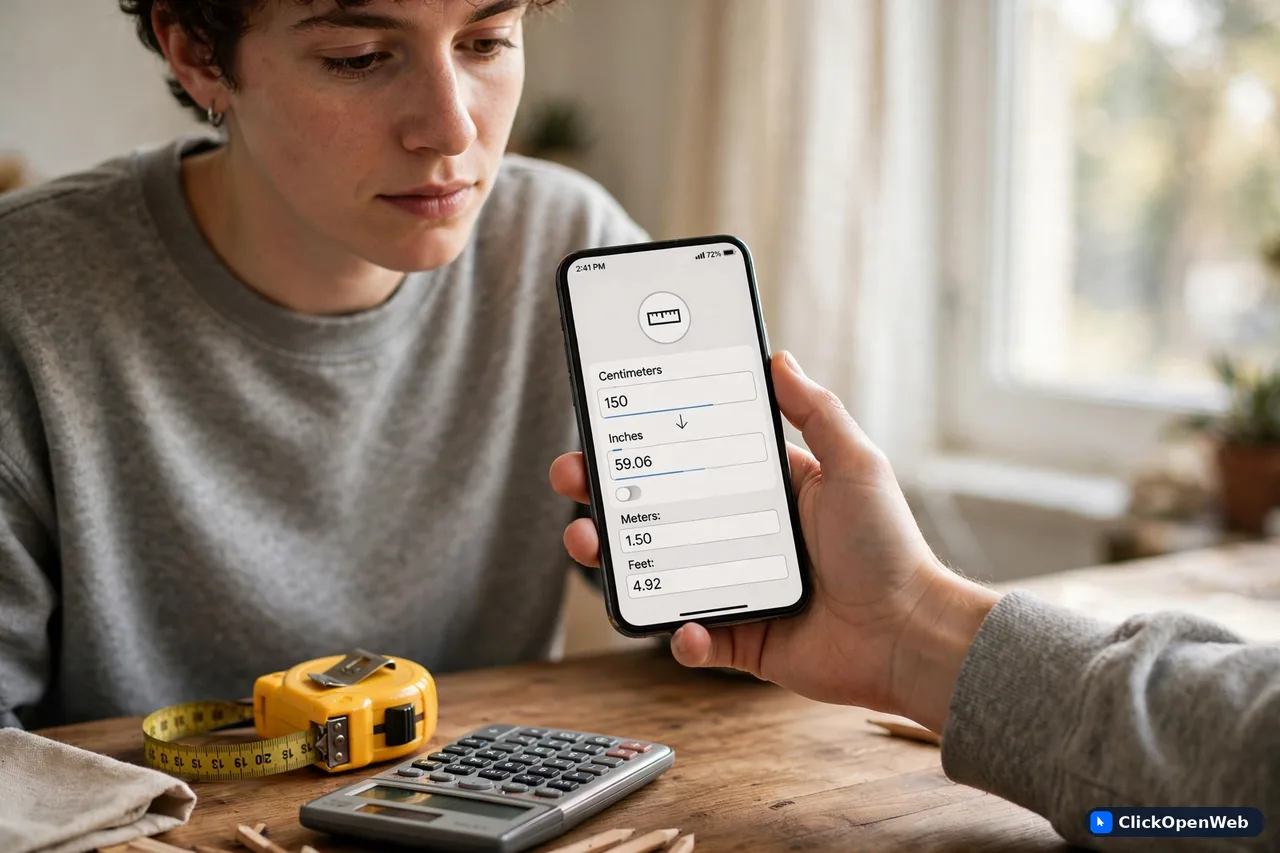
A recipe says 350°F, but your oven only shows Celsius. A road sign says the speed limit is 60 mph, but you think in kilometers per hour. A small free tool fixes both problems in seconds: our free unit converter. This guide shows you how to use unit converter tools step by step. You will learn the five simple steps, the exact formulas working behind the scenes, worked examples for temperature, weight, cooking, and travel, and the common traps that give wrong answers.
Learning how to use unit converter tools takes less than a minute: pick a category, type your number, choose the units you are converting from and to, and read the instant result. The tool multiplies by an exact factor, such as 1 inch = 2.54 cm, or uses a temperature formula like °F = °C × 9/5 + 32.
Table of Contents
What Is a Unit Converter and How Does It Work?
A unit converter is a small tool that changes a measurement from one unit to another without changing the amount it stands for. If you have 5 miles and want kilometers, or 100 grams and want ounces, the converter does the math for you.
Here is what happens inside the tool. Every unit in one group is linked to a single base unit. For length, the base is the meter. For weight, it is the kilogram. For volume, the liter. The tool turns your number into the base unit first, then turns that into your target unit. The math is simple: result = your number × (factor of your unit) ÷ (factor of the target unit). Doing it in two steps keeps every answer exact.
Temperature is the one exception. Celsius and Fahrenheit start from different zero points, so no single multiplier can connect them. The tool uses formulas instead. You will see them in the temperature section below.
Most of the factors are not guesses. They are exact definitions that countries agreed on in 1959. One inch is exactly 2.54 centimeters. One pound is exactly 0.45359237 kilograms. The table below lists the ones you will meet most often.
| Conversion | Exact factor |
|---|---|
| 1 inch | 2.54 cm exactly |
| 1 foot | 0.3048 m exactly |
| 1 mile | 1,609.344 m exactly |
| 1 pound | 0.45359237 kg exactly |
| 1 ounce | 28.3495 g |
| 1 US gallon | 3.785411784 L |
| 1 UK gallon | 4.54609 L |
The idea behind all of it is called a conversion factor, a ratio that links two units. A short Research page on the math of unit conversion explains this idea in simple terms.
How to Use Unit Converter in 5 Simple Steps
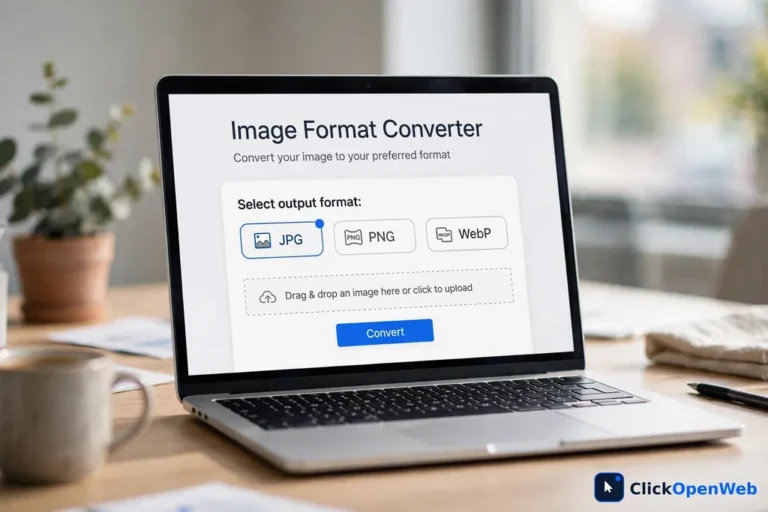
The first rule of how to use unit converter tools is to pick the right category first. A category is a family of units that measure the same thing, like length or temperature. Picking it first stops you from mixing units that do not belong together.
Step 1: Pick the category
Most converters offer these groups: Length, Weight, Temperature, Area, Volume, Speed, Time, Data Storage, Energy, and Pressure. Choose the one that matches your problem. A recipe needs Volume or Weight. A road trip needs Length or Speed. A hard drive needs Data Storage.
Step 2: Type your number
Type the value you want to convert. Whole numbers and decimals both work. Many converters let you type in either box, the “from” box or the “to” box, and they convert both ways at once.
Step 3: Choose your from and to units
Open the two dropdown lists. In the left one, pick the unit you have. In the right one, pick the unit you want. For example, from miles to kilometers, or from pounds to kilograms.
Step 4: Read the result and check it
The answer appears at once. Before you copy it, do a quick sense check. If you convert 5 miles and get 8,047 kilometers, you picked the wrong units. A result that is hundreds of times bigger or smaller than you expected is a sign to look at your input again.
Step 5: Swap to go the other way
Need the reverse? Hit the swap button, often shown as two arrows. It flips the from and to units and shows the answer for the opposite direction at once.
Try each step on our free unit converter as you read. It runs in your browser, needs no account, and updates the answer as you type.
How to Use Unit Converter for Temperature the Right Way
Temperature is the trickiest conversion, so it gets its own section. The short answer: pick the Temperature category, type your number, choose Celsius, Fahrenheit, or Kelvin on each side, and read the result. The tool applies the right formula every time.
Here are the formulas it uses:
- °F = °C × 9/5 + 32
- °C = (°F – 32) × 5/9
- K = °C + 273.15
Worked examples make this stick. A recipe at 100°F is 37.78°C. A pleasant day at 25°C is 77°F. Normal body temperature, 98.6°F, is 37°C. And minus 40 is the one point where both scales agree: -40°C = -40°F.
Need a fast guess without a tool? Double the Celsius number and add 30. So 20°C feels like about 70°F. The exact answer is 68°F, so the guess is close enough for weather talk.
One trap catches many people. A temperature reading and a temperature change are different things. If the forecast says tomorrow will be 5°C warmer, that is 9°F warmer, no matter the starting point. You multiply the change by 9/5 and skip the +32. Feeding a change into the full reading formula gives a wrong answer.
How to Use Unit Converter for Weight, Cooking, and Travel
If your problem is food, luggage, or a road trip, this is your section. The short answer: pick Weight for mass, Volume for liquids, and Length or Speed for travel. Then follow the same five steps.
Cooking across borders is the classic case. A US recipe lists ounces, but a European kitchen scale shows grams. One ounce is 28.3495 grams, so 250 grams of flour is about 8.8 ounces. For body weight, 1 kilogram is 2.20462 pounds, so a 70 kg person weighs about 154 pounds.
Travel brings two conversions. Distances: 1 mile is 1.609344 kilometers, so a 100-mile drive is about 161 kilometers. Speed: 60 mph is 96.56 km/h, which is the number you need when the road signs change at a border.
Heights need two quick conversions added together. Take 5 feet 8 inches. Five feet is 152.4 cm. Eight inches is 20.32 cm. Add them: 172.72 cm.
In the UK, body weight is often given in stone. One stone is 14 pounds, which is 6.3503 kilograms. So 11 stone is about 70 kilograms.
How to Use Unit Converter Without Mistakes
Most wrong answers come from five traps, not from bad math. The short answer: check US versus UK units, square the factor for area, know the difference between GB and GiB, and never treat temperature like a simple ratio.
- US and UK volumes are different. A US gallon is 3.785 liters. A UK gallon is 4.546 liters, about 20 percent more. The pints differ too: 473.2 mL in the US, 568.3 mL in the UK. Even the fluid ounce flips: 29.57 mL in the US, 28.41 mL in the UK. Always check which country your recipe or fuel figure comes from. A detailed Research guide on unit conversion traps lists these side by side.
- Area needs a squared factor. One meter is 3.2808 feet, but one square meter is 10.7639 square feet. A 100 m² flat is 1,076 ft², not 328. If your factor looks like a plain length factor, it is wrong.
- A 1 TB drive is not smaller than it should be. Drive makers count in decimal steps of 1,000, so 1 TB is 1,000,000,000,000 bytes. Windows counts in binary steps of 1,024, where 1 GiB is 1,073,741,824 bytes. Divide the first number by the second and you get about 931 GiB, which is the figure Windows shows.
- Temperature is not a ratio. 20°C is not twice as hot as 10°C, because the zero points differ. This is why temperature needs a formula, not just multiplication.
- Do not convert kilograms to liters directly. That jump needs the density of the substance. Water is the easy exception: 1 kg of water is about 1 liter. For oil, milk, or flour, you need the right density.
- Round only at the end. Keep the full number through every step and round the final answer. Rounding early stacks small errors into big ones.
For fast mental math, these rough guesses work well:
| Conversion | Quick guess | Exact |
|---|---|---|
| km to miles | × 0.6 | × 0.621371 |
| kg to lbs | × 2.2 | × 2.204623 |
| °C to °F | × 2 + 30 | × 9/5 + 32 |
| m to feet | × 3.3 | × 3.28084 |
| liters to US gallons | ÷ 4 | ÷ 3.785412 |
| m² to ft² | × 10.8 | × 10.76391 |
Can You Trust the Results?
Yes, you can trust the results for everyday use. The short answer: the factors are exact international definitions, so the only rounding happens in what the screen shows.
Since the 1959 agreement between countries, imperial units are defined in metric terms. One inch is exactly 2.54 cm. One pound is exactly 0.45359237 kg. The tool stores these full values and only rounds the display, often to eight significant digits. That is more precision than any tape measure or kitchen scale can use.
One honest limit: the answer can never be more precise than your input. If you measured a shelf as 71 inches with a tape, the exact math gives 180.34 cm, but 180 cm is the honest answer, because your tape was only good to about an inch. Match your decimals to how carefully you measured.
How to Use Unit Converter on a Phone
Yes, it works fine on a phone, and there is no app to install. The short answer: open the converter page in your phone browser and use it the same way as on a computer.
Tap the category dropdown to pick your group. Tap the number box and your phone opens the number keyboard. Pick your from and to units with a tap each. The result appears in large text as you type, and the swap button is big enough for a thumb.
The layout stacks everything in one column, so nothing runs off the screen and you never need to zoom sideways. Your work stays in the browser tab. Close it and open it later, and you can start a fresh conversion in seconds.
How to Use Unit Converter Logic by Hand
Sometimes you want to check the tool or work without one. The short answer: multiply by the conversion factor. For temperature, use the formula instead.
A conversion factor is written as 1 A = k B. To go from feet to meters, the factor is 0.3048. So 15 feet × 0.3048 = 4.572 meters. To go the other way, divide by the same factor, or multiply by its flip: 1 ÷ 0.3048 = 3.2808.
Write the units like fractions and cross out the ones that cancel. 15 ft × (0.3048 m / 1 ft) leaves only meters. This trick keeps you from multiplying when you should divide. Omni’s measurement converter [Official] shows this fraction method step by step with its own worked examples.
For squared units, square the factor. One foot is 0.3048 meters, so one square foot is 0.3048 × 0.3048 = 0.092903 square meters. A 100 ft² room is about 9.29 m².
Getting units wrong can be costly. In 1999, NASA lost the Mars Climate Orbiter because one team used pound-force seconds while another expected newton seconds. The numbers were off by a factor of 4.45, and the spacecraft burned up in the Martian atmosphere. The lesson: always write the unit next to every number.
When an Online Converter Is the Wrong Tool
An online unit converter is the wrong tool in a few cases. The short answer: skip it for money, language, and anything that needs extra facts beyond the number.
Currency is out. Exchange rates move every minute, so no fixed factor exists. Language translation is out too, though it is sometimes called conversion by mistake. File format changes, like turning a photo into a PDF, are a different job for a different tool.
Also skip it when a conversion needs facts the tool cannot know. Grams to milliliters needs the density of the substance. Land units that change by region, like the bigha in parts of South Asia, are not in most converters.
And if you only change text, not numbers, our case converter is the right tool. It flips uppercase and lowercase in one click.
Conclusion
You now know how to use unit converter tools for everyday jobs: cooking, travel, schoolwork, and quick work math. Pick the right category, type your number, choose your units, and let the exact factors do the rest. Open our free unit converter, run your first conversion, and keep the page bookmarked. The next time a recipe, a road sign, or a package label speaks a different unit language, you will answer in seconds.
Frequently Asked Questions
Do I need to press a convert button?
No. Good converters update the answer as you type or as you change a unit. There is no button to press and no page to reload. If a site makes you click Convert, it still works, but instant tools are faster.
How do I convert between two measurement units?
Find the factor that links the two units, then multiply. The factor for inches to centimeters is 2.54, so 10 inches × 2.54 = 25.4 cm. For the reverse trip, divide by the same factor: 25.4 ÷ 2.54 = 10 inches.
What is a conversion factor and how does it work?
A conversion factor is a ratio that says how many of one unit equal another, like 1 foot = 0.3048 meters. You multiply your number by this ratio. Because the top and bottom of the ratio mean the same amount, the value stays the same and only the unit label changes.
Are US and UK gallons the same?
No. A US gallon is 3.785 liters, while a UK gallon is 4.546 liters, about 20 percent more. The pints and fluid ounces differ too. Always check which gallon your source uses before you convert, or your answer will be off by a fifth.
How do I convert Celsius to Fahrenheit in my head?
Double the Celsius number and add 30. So 20°C is about 70°F, and 30°C is about 86°F. The exact math is °F = °C × 9/5 + 32, which gives 68°F for 20°C. The quick guess is close enough for weather and cooking talk, but use the full formula for anything precise.
How do you convert square feet to square meters?
Square the length factor. One foot is 0.3048 meters, so one square foot is 0.3048 × 0.3048 = 0.092903 square meters. Multiply your square feet by 0.092903. A 100 ft² room is about 9.29 m². The same rule works for volume: cube the factor instead of squaring it.
Can I convert kilograms to liters?
Not directly. That jump needs the density of the substance, because a kilogram of feathers and a kilogram of lead take up different amounts of space. Water is the simple exception: 1 kg of water is about 1 liter. For anything else, look up its density first.
Why does my 1 TB drive show about 931 GB?
Drive makers count in decimal steps of 1,000, so 1 TB is 1,000,000,000,000 bytes. Windows counts in binary steps of 1,024, where 1 GiB is 1,073,741,824 bytes. Divide the first number by the second and you get about 931 GiB, which is the figure Windows shows.
Are the results rounded?
The factors are stored at full precision, and only the display is rounded, often to eight significant digits. That is more than any everyday job needs. Just remember the answer can never be more precise than the number you typed in.
Can I use a unit converter on my phone?
Yes. Once you learn how to use unit converter tools on a computer, the phone version feels the same. Open the page in your mobile browser, tap the category and unit dropdowns, type with the number keyboard, and read the large result. No app or account is needed.
Is an online unit converter free to use?
Yes. The good ones run fully in your browser and ask for nothing: no account, no payment, no install. They do the math on your own device, so your numbers never leave your phone or computer. You can convert all day without signing up or hitting a usage limit.
Which units can I convert?
Length, weight, temperature, area, volume, speed, time, data storage, energy, and pressure. That covers miles to kilometers, pounds to kilograms, Celsius to Fahrenheit, square feet to square meters, gallons to liters, knots to km/h, and many more pairs across metric and imperial systems.