Anthropic Fund, Nscale Exit, Tenstorrent: Top Stories Today
Big moves in AI money, chips, and phones today. Anthropic is giving away part of its company for public good before its IPO. Microsoft walked away from a major UK data centre deal because the power grid cannot keep up. And a chipmaker raised $1.5 billion to challenge Nvidia. Here are the stories you need to know, in plain words.

Anthropic Pledges 5 Percent of Its Shares to a New Public Benefit Fund
Anthropic, the company behind Claude, said on Sunday it will put 5 percent of its shares into a new Anthropic Public Benefit Fund. The move still needs stockholder approval. The board can add 2 percent more for every 50 percent rise in the company value above a set baseline. The fund will be an LLC, not a charity. Anthropic says none of the equity will be used for lobbying or political giving. Possible uses include large donations to nonprofits or direct payments to people hurt by AI-driven job losses. The company had already set aside $200 million for workers affected by automation. When you count the founders’ pledge to give away 80 percent of their own equity plus an employee donation match, roughly 20 percent of the company is now promised to public benefit. CNBC reports the IPO is planned for November. Governance details will be shared in the coming months.
Why it matters: This is one of the biggest corporate giveaways tied to AI’s effect on jobs, and it lands just weeks before Anthropic goes public. It shows AI labs want to look responsible as the public watches how AI changes work.
Sources: AI News Online, Mo Styles
Microsoft Exits Nscale’s UK Data Centre Deal Over Power Delays
Microsoft has ended its deal to be the anchor customer at Nscale’s planned data centre in Loughton, Essex. The Telegraph first reported the news on Sunday. The site was meant to hold about 23,000 Nvidia GPUs. But UK grid officials told Nscale they cannot supply enough power to the site until the 2030s. That made the project impossible on schedule. Nscale called its Microsoft relationship strong and long term, and said it is looking at other power options for the site. This is bad timing for Nscale. The company is seeking to raise about $3 billion in a New York IPO this month, and it was hoping for a valuation of up to $35 billion. Some investors are now pushing for $16 billion to $19 billion instead. Microsoft and Anthropic make up about 85 percent of Nscale’s contract value. Nscale’s Norway site is also six months behind schedule, with only 6.4 of the planned 30 megawatts running. Executives across the industry now expect only 7 to 10 of the hundreds of GPU rental firms, called neoclouds, to survive a shakeout.
Why it matters: The limit on AI growth is no longer chips. It is electricity. If grids cannot connect data centres for years, the whole AI buildout slows down, and investors are starting to price in that risk.
Sources: Business Times, AI News Online
Tenstorrent Raises $1.5 Billion at a $6.2 Billion Valuation
US chipmaker Tenstorrent raised $1.5 billion in Series E funding at a $6.2 billion valuation. It was the largest announced startup round of the day on Monday. Tenstorrent builds AI chips and is seen as one of the few serious challengers to Nvidia in AI hardware. The raise shows investors still have strong appetite for AI chip infrastructure, even after a sharp sell-off in AI stocks last week. In Europe, Swiss biotech company Nouscom raised about $135 million to advance its cancer-prevention program. In India, Bengaluru-based Even Healthcare raised $50 million at a $300 million valuation, with Khosla Ventures leading the round. Smaller rounds went to startups across Europe, Asia, the Middle East, and Australia, including sports tech company Rezzil and Chinese physical-AI startup Gewu Tongzhi. The pattern is clear. The biggest checks are flowing to capital-heavy AI infrastructure, while smaller rounds spread across health, enterprise software, and consumer tech.
Why it matters: Money is moving toward the hardware that runs AI. Whoever builds real Nvidia alternatives could reshape the cost of AI for every business, including small ones.
Source: TechStartups
Disney Agrees to Hire Most of Bankrupt Character.AI’s Staff
Disney will offer jobs to at least 60 Character.AI employees, which is most of the chatbot startup’s workforce. The roles carry an estimated $60 million in yearly pay. Character.AI filed for bankruptcy earlier in the week. Disney had already agreed to buy some of its assets for $20 million in what is called a stalking horse bid, meaning a rival bidder can still offer more. Character.AI’s former CEO Karandeep Anand recently became Disney’s first chief technology officer. Character.AI was once one of the best-known consumer chatbot apps, with millions of users who chatted with AI characters. Running a standalone AI companion app turned out to be too costly. Licensing models, paying for computing power, and keeping users safe all added up. For Disney, this is a talent purchase. It gains engineers who know how to build chatbots that millions of people actually use.
Why it matters: This is a clear sign that standalone AI apps struggle to survive alone. The future of AI chat may belong to big platforms that can afford to run it at scale.
Source: AI News Online

iPhone Duo’s Real Battery Size Revealed in EU Filing
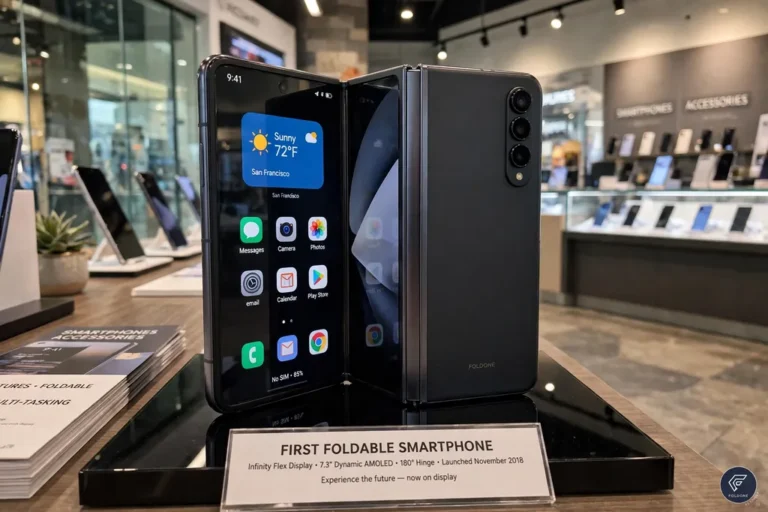
Apple’s iPhone Duo pre-orders opened on October 16. Now a regulatory filing submitted to the European Union has revealed the phone’s real battery capacity. The iPhone Duo packs a 4,883mAh battery, split across two separate cells, according to 9to5Mac. That is bigger than the iPhone 18 Pro’s 4,288mAh battery but smaller than the iPhone 18 Pro Max’s 5,567mAh cell. Apple never publishes battery numbers on its spec sheets. EU disclosure rules are often the only way buyers learn the true figures before a phone ships. Two cells instead of one can help with charging speed and heat control, which matters for a phone with a new form factor. If you are planning an upgrade, the numbers confirm the Duo sits between the regular Pro and the Pro Max on battery, not above them.
Why it matters: Battery is one of the top buying factors for phone shoppers. Knowing the real number helps buyers compare honestly, since marketing rarely tells the full story.
Source: GT Webs
Fired Georgia Officer Shared Police Camera Login With Her ICE Agent Husband
A Savannah, Georgia police officer was fired in August after an internal investigation found she shared her login for the Flock license-plate camera network with her husband, who works as an ICE agent. Newly public findings show her account was used for nearly 1,000 license-plate searches across six states between January and July, according to The Verge. Most of the searches involved vehicles tied to Hispanic drivers. Savannah police say they do not share Flock data with ICE. Sharing login credentials broke department policy. Flock cameras read license plates and store the records in a shared network that police departments across the country can search. The case shows how a single shared password can turn a local police tool into a wide tracking system with no oversight. Privacy advocates have warned for years that these camera networks grow quietly with little public control.
Why it matters: This is a real case of how surveillance tools spread beyond their stated use. For small businesses and citizens, it is a reminder that data collected for one purpose can end up somewhere else entirely.
Source: GT Webs
Tech Stocks Rebound After AI Sell-Off as Earnings Week Begins
US stock futures rose on Monday morning as tech looked to bounce back from a steep downturn last week. Nasdaq futures were up about 1.3 percent and S&P 500 futures rose 0.5 percent. Last week was the first losing week for the Nasdaq in more than a month, driven by a sharp sell-off in AI stocks. Investors are now digging in ahead of key earnings. Meta, Tesla, and Netflix headline a busy earnings week. In other news, Elon Musk said he would give a SpaceX share to every US child next year. Crypto-related stocks rose along with bitcoin, which traded near $82,500 after a weekend low around $80,600. Gold held near $4,185 an ounce. The 10-year Treasury yield ticked up to 5.10 percent. Oil fell about 1 percent to $100.40 a barrel after surging Friday on new attacks on ships in the Strait of Hormuz.
Why it matters: Earnings from Meta, Tesla, and Netflix will show whether big tech can turn AI spending into real profit. That result will shape how much money keeps flowing into AI infrastructure for the rest of the year.
Source: Investopedia