OpenCode Breach, G7 Drills, Redmi K100: Top Stories Today

Welcome to today’s tech news today roundup. This was a big day for security stories. A developer tool breach put stored API keys at risk, and G7 finance leaders agreed to practice for AI cyber attacks. AI labs also shared rare data on how agents are changing hiring, while startups raised fresh money across India and the US. Here are the seven biggest stories from the last 24 hours.
1. OpenCode Breach Puts Stored API Keys at Risk
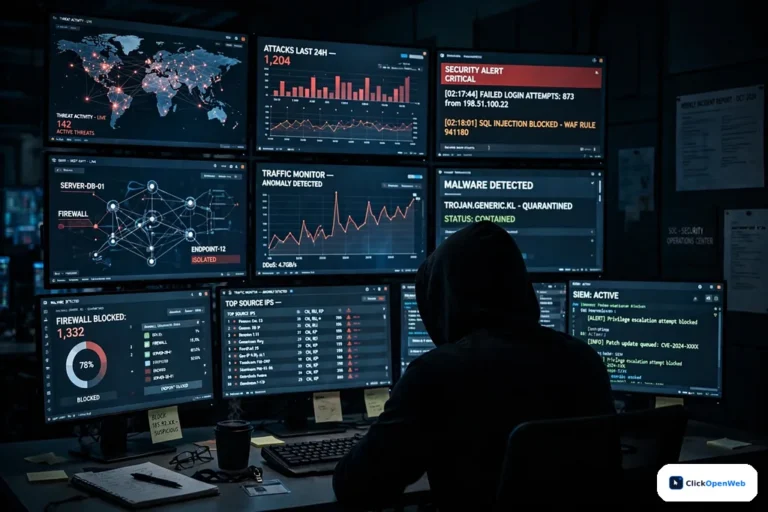
Users of OpenCode, a popular developer tool, need to rotate their API keys right away. The company behind it, Anomaly Innovations, started emailing users late on October 17. The emails said provider keys for OpenAI, Anthropic, and Google may have been exposed through an old console system that was being shut down.
The company could trace the first exposure to about 22 hours before it sent the first notice. The detailed timeline did not come from the company itself. It came from a developer who shared it publicly. Two users have already reported unauthorised use of their Claude API keys and about $100 in fraudulent charges.
Security experts say anyone who stored keys in OpenCode should revoke them and create new ones directly in each provider’s dashboard. Users should not click links in notification emails. They should check billing and usage logs going back to October 17 and set spending limits on their accounts.
Why it matters: API keys are like passwords for your AI bill. A stolen key lets an attacker spend your money and access your data. This story is a warning for every developer who saves keys in third-party tools.
Source: AIToolsRecap
2. G7 Finance Ministers Plan Drills Against AI Cyber Attacks
G7 finance leaders have agreed to run tabletop exercises to prepare for AI cyber attacks. Japanese Finance Minister Satsuki Katayama shared the news after a meeting of finance ministers and central bank governors on the sidelines of the IMF annual gathering in Bangkok.
The plan calls for simulations designed by G7 finance authorities. These drills will test how well countries can respond to AI-driven attacks on banks and financial systems. Private financial institutions may join the exercises depending on how the simulations are set up. The results will be used to update existing response plans and manuals.
The move follows a warning from the International Monetary Fund. The IMF said this week that confidence could be badly damaged by an AI-enabled cyber attack on a critical service of a financial institution. Banking regulators around the world are stepping up efforts to contain growing AI risks.
Why it matters: Money is a top target for AI attacks. These drills show that world leaders are taking the threat seriously before a major attack happens, not after.
Source: The Indian Express
3. Anthropic Shares How AI Agents Changed Its Own Hiring
Anthropic has published rare data on what AI agents did to its own workforce. By August 2026, interactive agent hours at the company ran about six times employee hours. At the same time, the share of junior staff in its technical hiring fell from 27% to 9%.
The company also reported that commits per engineer are roughly five times what they were six months earlier. The detail that gives these numbers weight is a quality check. The report says agent-written code and human-written code were reverted at the same rate. That means the extra output was not junk.
The junior share of Anthropic’s total technical staff fell from 21% to 14% since early 2025. These are two different measures and should not be mixed up. One measures new hires. The other measures the whole team.
Why it matters: This is real data from a top AI lab, not a prediction. It shows that agents are doing the work junior engineers used to do. Young tech workers should learn to manage and direct agents, because that is where the new jobs are.
Source: AIToolsRecap
4. Four Indian AI Startups Raise $50.6 Million in a Record Week
Four Indian AI startups have raised a combined $50.6 million in one week. The money came during a record funding week for Indian startups. Between October 12 and October 17, 28 startups raised a total of $302.85 million, according to Entrackr.
RapidCanvas led the AI pack with a $29 million Series B round. The round was led by Vertex Ventures Southeast Asia and India. RapidCanvas builds a platform for custom enterprise AI and AI-agent applications. Its total funding now stands at $52.5 million.
The other three deals were smaller but still strong. Clueso, an AI video creation platform for businesses, closed a $10 million Series A led by Dharana Capital. Parallel Loop, an AI operating partner for enterprises, raised a $6.6 million seed round led by 3one4 Capital. Shamrock AI, building an agentic AI platform for enterprises, raised $5 million in its first institutional seed round led by Endiya Partners.
Why it matters: The money is flowing into applied AI and agents, not just research. Investors are betting that companies will pay for AI tools that do real business work. India is becoming a serious player in this market.
Source: AI Startups News
5. 29 AI “Neolabs” Have Raised $23 Billion, Most With Nothing to Sell
A new count from Dealroom and venture firm Radical Ventures found that 29 AI “neolabs” have raised a combined $23 billion. These are startups founded by researchers who left established model makers. Yet fewer than 35% of them have released a commercial product.
The tally comes two years after Ilya Sutskever’s Safe Superintelligence kicked off the neolab era. That company is now valued at $32 billion. It has said it will not ship any product until it reaches superintelligence. Just over half of the 29 labs have released any code at all, often only research demos.
Nvidia has emerged as the era’s kingmaker with 32 separate investments in startup model makers. Mira Murati’s Thinking Machines Lab is reportedly in talks to raise at a valuation near $40 billion, with annualised revenue above $200 million.
Why it matters: Investors are writing some of the biggest cheques in venture history based on promise, not product. This pattern looks like classic venture hype. The open question is whether star researcher reputations can turn into real revenue.
Source: Dealroom
6. Hackers Exploit SiteGuard WAF Flaw to Run Commands as Admins
Attackers are actively exploiting a flaw in SiteGuard Server Edition, a web application firewall product. The vulnerability is an OS command injection bug. It lets hackers execute commands as root or SYSTEM on affected servers.
When an attacker gets root access, they own the whole machine. They can steal data, install malware, and move into connected systems. A WAF is supposed to protect websites from attacks, so a flaw in the WAF itself is especially dangerous.
Security teams are urging admins to patch SiteGuard Server Edition immediately. Any server running an affected version should be checked for signs of intrusion. Organisations should review their logs for unusual activity and treat exposed systems as potentially compromised until proven otherwise.
Why it matters: Attackers target security tools because one flaw unlocks thousands of servers. If you run SiteGuard, patch now. If you do not, check whether your vendors do.
Source: IT Security News
7. Redmi K100 Launch Confirmed With 10,000mAh Battery and 185Hz Display
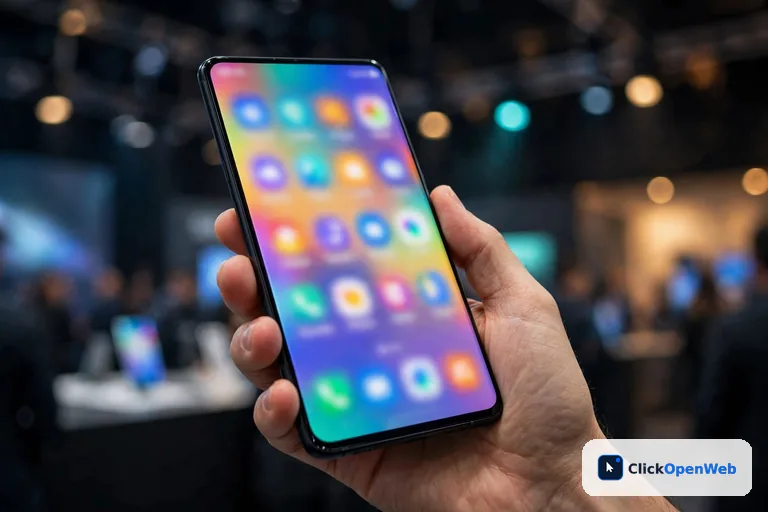
Xiaomi has confirmed the Redmi K100 for an October launch. The phone is built around endurance. It packs a 10,000mAh+ silicon-carbon battery, which is far bigger than most phones. Xiaomi says buyers will no longer have to choose between a great screen and multi-day battery life.
The display is a 185Hz OLED panel. The phone also has Bose-tuned stereo speakers and an IP68 rating for dust and water resistance. It runs on the Snapdragon 8 Elite chip. Xiaomi also confirmed that Redmi Clip Neo open-ear wireless earbuds will launch alongside the phone in black and white.
The K100 is expected to land in China first. Reports say it will arrive in India later as the POCO F9. Xiaomi will share final pricing at a keynote later this month.
Why it matters: A 10,000mAh battery is a real step forward. If this becomes normal, phone makers will have a hard time selling thin phones with weak batteries. Watch for rivals to copy this move.
Source: Kunal Chowdhury
More in Today’s Tech News Today Roundup

A few extra stories worth knowing. GitHub announced that its Copilot app now works with the Logitech MX Keypad, so developers can trigger agent tasks from a physical accessory. Obsidian launched Pele, an open-source Mermaid diagram renderer for its upcoming desktop release. DeepSeek shipped its V4.1 Flash 1017 model with a new Search and Fetch API priced at $0.75 per 1,000 successful requests. And Xiaomi’s 18 Fold has sold over 104,700 units in its first month, with first-sale retail volume up 300% over the previous large foldable, according to Xiaomi executive Lu Weibing.
Sources
- AIToolsRecap: OpenCode breach and Anthropic hiring data
- The Indian Express: G7 AI cyber-attack drills
- AI Startups News: Indian AI startup funding
- Dealroom: AI neolab funding
- IT Security News: SiteGuard WAF flaw
- Kunal Chowdhury: Redmi K100 launch
- XimiTime: Xiaomi 18 Fold sales
- Saudi Shopper: GitHub Copilot and Obsidian Pele updates